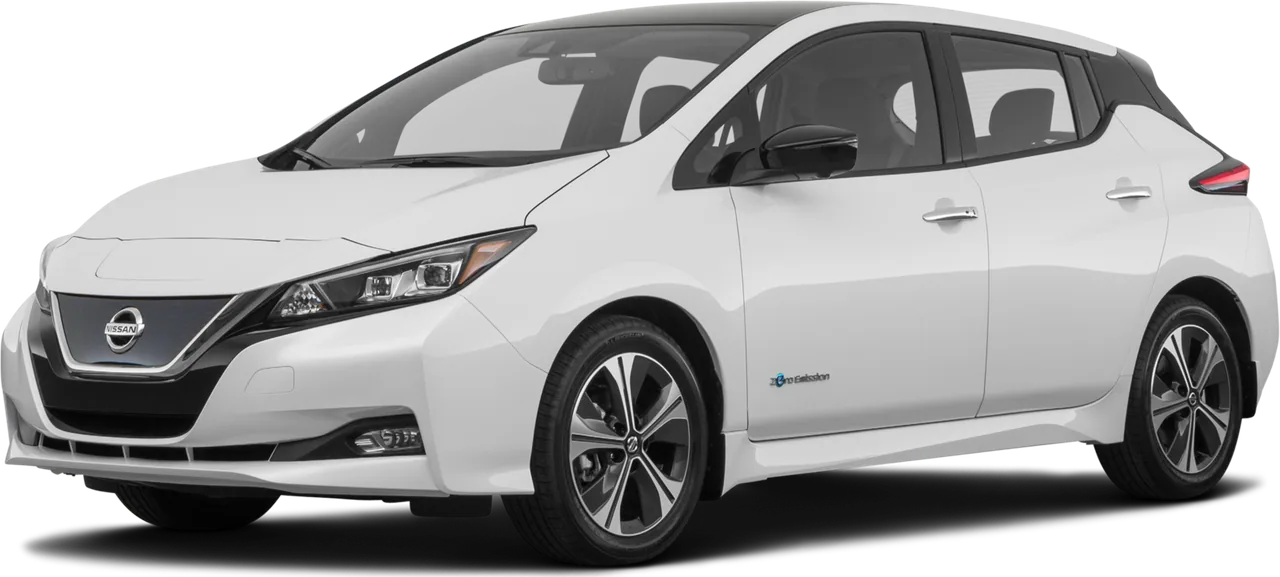
2020 Nissan Leaf
62 kW-hr battery pack
Electric Hatchback · FWD
Based on battery health, build quality, owner data, EPA range, and market pricing
Below average for 2020 EV Hatchbacks (class avg 65)
Personalize this scoreIs a low score bad?
Last scanned 40 days ago
The 2020 Nissan Leaf (62 kW-hr battery pack) puts down 214 hp, 226 miles of EPA range and a 56 kWh battery, and the score is below the comfortable threshold — discount-heavy negotiation only.
Score read
A 54/100 makes this a high-risk buy. Do not let the composite hide this split: software and driver-assist score is 80/100, while battery-health score is 38/100. On Reddit, owners keep flagging the same two issues: battery degradation and owner satisfaction. Documented completion matters more than the recall count itself.
Price context
Used examples are running around $8,326. Treat that as a budgeting floor, not a final price; pull a current KBB Fair Purchase or Edmunds True Market Value for this exact trim before negotiating.
Who this is for
✓ Good for
- ⏱ Daily commuter ≤50 mi/day, predictable charging
✗ Avoid if you are a
- ↦ Road tripper Long trips, needs DC fast network
- $ Bargain hunter Best TCO, reliability + low depreciation
Gotchas
- Serviceable Recall paperwork has to match the exact VIN.
Mitigation Use NHTSA and the automaker lookup, then require repair records instead of a verbal promise.
- Verify Battery condition is the number not to take on faith (38/100).
Mitigation Require a battery-health report, charging history, or dealer diagnostic before final price.
Pre-purchase inspection
- 1 Run the exact VIN through NHTSA and the automaker recall lookup before discussing price.
- 2 Compare the dashboard range estimate with the EPA 226-mile rating after a full charge.
- 3 Confirm how much of the 8-year/100,000-mile battery warranty remains and whether it transfers.
- 4 If road trips matter, run a short DC fast-charge session and watch whether speed tapers normally.
- 5 Ask for a battery-health report or dealer diagnostic before discussing final price.
VIN status first This model has 6 NHTSA recall records. The exact VIN lookup decides whether the car in front of you is clear.
Complaint context This scan found 147 NHTSA complaint records (21 per 10K VINs, elevated — verify before purchase). Read the themes below before treating the raw count as the verdict.
Price anchor Current market range is $6,491-$10,161. Use that range to compare listings for the same trim, mileage, and condition.
Pricing & Market Value
Score Breakdown
What matters most to you?
Drag the sliders to prioritize what you care about. Your TrimIndex Score recalculates instantly.
Vehicle Specifications
Charging infrastructure note
CHAdeMO DC fast charging is being phased out across major US networks. Verify local availability before purchase, and plan primarily on Level 2 home charging.
EVs at your price point that match or beat this trim
Price-gated peer set: vehicles within $6.7K–$10.0K market value (±20% of $8.3K). 0 outscore · 1 score within ±2. Mixed across makes — no "spend more, score better" comps.
The federal $4,000 used-EV credit ended Sept 30, 2025.
But 10 states still run their own used-EV rebate programs — some up to $5,000. Pick your state to see what's available for this trim.
Source & disclaimer
Dealers make ~$5,090 on the average car loan.
After the price is set, the finance manager runs four plays to rebuild margin. Every buyer without a pre-approval is a target. Here's exactly what they run — and what stops each one.
78% of dealer loans carry a hidden +1.13% markup above what the lender actually charges. You never see it — it's buried in the contract. · CFPB
Dealer must match or beat your lender — they can't add margin invisibly. The markup play is dead on arrival.
Once you answer, they stretch the term to hit your number. Median result: $4K less off the price, 12 more months on the loan. · Industry avg
Financing is done. Only the sale price is on the table — and the dealer knows it.
Back-office F&I profit averages $1,975/vehicle, up 8.5% YoY. These products exist — but dealer markup is 4–10x what you'd pay elsewhere. · Dealership Guy
Dealer GAP runs $500–1K. Your insurer sells the same coverage for $100–250 over 5 years. Now you know.
"Your loan fell through — come re-sign." This pulls your APR up +5% on average. It's legal. It works because you've already driven the car home. · Ctr for Responsible Lending
A lender commitment letter means the deal is final. "Pending dealer approval" doesn't apply. You can't be yo-yo'd.
That's 41 months of your car payment — handed to the dealer's finance department for nothing.
Takes 2 minutes. No obligation to use it — but you'll walk in with all the leverage.
Pre-approval is a soft credit inquiry — no score impact. FICO treats all auto-loan hard pulls within 14 days as one, so you can still shop rates at the dealer.
NHTSA Recalls (6)
Nissan North America, Inc. (Nissan) is recalling certain 2019-2020 LEAF vehicles equipped with a Level 3 quick charging port. The lithium-ion battery may overheat during Level 3 charging.
A quick charging battery that overheats increases the risk of a fire.
Check VIN status at NHTSA.govNissan North America, Inc. (Nissan) is recalling certain 2018-2022 LEAF vehicles. Damage to the camera harness can cause distortion or loss of the rearview camera display image. As such, these vehicles fail to comply with the requirements of Federal Motor Vehicle Safety Standard number 111, "Rear Visibility."
A rearview camera that does not properly display an image can reduce the driver's rear view, increasing the risk of a crash.
Check VIN status at NHTSA.govNissan North America, Inc. (Nissan) is recalling certain 2018-2023 LEAF vehicles. The vehicle may accelerate unintentionally if the driving mode is changed ("D" to "B"; e-Pedal "On"; or "ECO" mode) after disengaging the cruise control.
Unintentional acceleration can increase the risk of a crash.
Check VIN status at NHTSA.govNissan North America, Inc. (Nissan) is recalling certain 2018-2023 LEAF vehicles. The Owner's Manual instructions for defroster operation are incorrect, and may result in reduced defroster performance under specific conditions. As such, these vehicles fail to comply with the requirements of Federal Motor Vehicle Safety Standard number 103, "Windshield Defrosting and Defogging Systems."
Reduced defroster performance can limit visibility out of the windshield, increasing the risk of a crash.
Check VIN status at NHTSA.govNissan North America, Inc. (Nissan) is recalling certain 2020 Altima, Maxima and Leaf vehicles. The rear window glass may not remain properly secured to the vehicle.
Rear window glass that separates from the vehicle can increase the risk of a crash.
Check VIN status at NHTSA.govNissan North America, Inc. (Nissan) is recalling certain 2020 LEAF electric vehicles. Under certain circumstances, the images for the back-up camera can disappear while in reverse. As such, these vehicles fail to comply with Federal Motor Vehicle Safety Standard (FMVSS) number 111, "Rear Visibility."
The lack of an image in the back-up camera display increases the risk of a crash.
Check VIN status at NHTSA.govNHTSA Complaints (147 total · 21 per 10K US vehicles · elevated — verify before purchase)
I own a 2020 Nissan Leaf S with the fast-charge (CHAdeMO) package, which is affected by the battery/fast-charge recall (Manufacturer Recall Number R24B2, NHTSA Recall Number 24V-700). This recall restricts or disables DC fast charging, substantially limiting the vehicle’s usability and functionality, making it difficult to use for normal transportation and longer trips. I am filing this complaint to report the safety and usability impact of this battery/fast-charge recall on 2020 Leaf fast-charge vehicles and to make sure it is properly documented.
I own a 2020 Nissan Leaf S with the fast-charge (CHAdeMO) package, which is affected by the battery/fast-charge recall (Manufacturer Recall Number R24B2, NHTSA Recall Number 24V-700). This recall restricts or disables DC fast charging, substantially limiting the vehicle’s usability and functionality, making it difficult to use for normal transportation and longer trips. I am filing this complaint to report the safety and usability impact of this battery/fast-charge recall on 2020 Leaf fast-charge vehicles and to make sure it is properly documented.
Nissan still has not provided a remedy for recall number Nissan recall R24B2 NHTSA 24V700000. This prevents me from being able to access the full use of the car because I cannot fast charge without risk of damaging the EV battery. Just last week I had to borrow a gas car and pay for gas in order to take a road trip. This is unacceptable. We should have a remedy by now.
Nissan still has not provided a remedy for recall number Nissan recall R24B2 NHTSA 24V700000. This prevents me from being able to access the full use of the car because I cannot fast charge without risk of damaging the EV battery. Just last week I had to borrow a gas car and pay for gas in order to take a road trip. This is unacceptable. We should have a remedy by now.
My vehicle has been under recall campaigns needing VIN-specific checks for over 1 year for a risk of battery fire if quick charged. I am filing this complaint because Nissan has failed to remedy this recall safety issue in a timely manner. It is completely unacceptable to have an open safety recall with no remedy for greater than 1 year! This is recall 24V700000 Thank you for help.
My vehicle has been under recall campaigns needing VIN-specific checks for over 1 year for a risk of battery fire if quick charged. I am filing this complaint because Nissan has failed to remedy this recall safety issue in a timely manner. It is completely unacceptable to have an open safety recall with no remedy for greater than 1 year! This is recall 24V700000 Thank you for help.
It has been a year on this recall and Nissan has not provided any fix.
It has been a year on this recall and Nissan has not provided any fix.
On Monday, I was departing from the supermarket parking lot. As I was waiting at the stop sign to exit the parking lot, my 2020 Nissan Leaf SV vehicle shuttered and there was a blinking notification on the dashboard stating: TM System Malfunction EPedal Failure Suddenly my ability to stop the vehicle was compromised. I turned onto the surface street and continued to pump the brakes with no response. I turned back into the supermarket parking lot and continued to pump the brakes but there was no engagement. I slowly drove around the parking lot trying to stop with no success. I eventually had to turn on the emergency brake and then force the vehicle into park. It was a very scary scenario. I called the dealership to explain the situation and the service advisor suggested that I have the vehicle towed to the dealership for a diagnostic evaluation. After sitting in the car for 30 minutes with it turned off, I turned it back on and drove the vehicle on surface streets to the dealership with no breaking incident. The next day, the service department performed a diagnostic inspection and determined that the 12 volt battery was the cause and needed to be replaced. I was relieved that this was the issue. The technician kept the vehicle one more day to drive it and be sure it was operational. In the end, I purchased a new battery. I am writing your organization to report this incident to try to avoid any injuries or deaths in the future. This incident happened to me without any warning and could have been very dangerous if I was at a busy intersection or on the freeway. There was no warning on the dashboard about the battery or maintenance warning to see the dealer. This needs to researched with Nissan Motor Company. Thank you [XXX] [XXX] INFORMATION REDACTED PURSUANT TO THE FREEDOM OF INFORMATION ACT (FOIA), 5 U.S.C. 552(B)(6)
On Monday, I was departing from the supermarket parking lot. As I was waiting at the stop sign to exit the parking lot, my 2020 Nissan Leaf SV vehicle shuttered and there was a blinking notification on the dashboard stating: TM System Malfunction EPedal Failure Suddenly my ability to stop the vehicle was compromised. I turned onto the surface street and continued to pump the brakes with no response. I turned back into the supermarket parking lot and continued to pump the brakes but there was no engagement. I slowly drove around the parking lot trying to stop with no success. I eventually had to turn on the emergency brake and then force the vehicle into park. It was a very scary scenario. I called the dealership to explain the situation and the service advisor suggested that I have the vehicle towed to the dealership for a diagnostic evaluation. After sitting in the car for 30 minutes with it turned off, I turned it back on and drove the vehicle on surface streets to the dealership with no breaking incident. The next day, the service department performed a diagnostic inspection and determined that the 12 volt battery was the cause and needed to be replaced. I was relieved that this was the issue. The technician kept the vehicle one more day to drive it and be sure it was operational. In the end, I purchased a new battery. I am writing your organization to report this incident to try to avoid any injuries or deaths in the future. This incident happened to me without any warning and could have been very dangerous if I was at a busy intersection or on the freeway. There was no warning on the dashboard about the battery or maintenance warning to see the dealer. This needs to researched with Nissan Motor Company. Thank you [XXX] [XXX] INFORMATION REDACTED PURSUANT TO THE FREEDOM OF INFORMATION ACT (FOIA), 5 U.S.C. 552(B)(6)
Manufacturer has failed to provide a remedy for recall campaign R24B2 in a timely manner. The vehicle capability is impaired as the effective range is now limited due to the inability to fast charge the vehicle. It no longer provides the same functionality. The value of the vehicle is also reduced due to the recall campaigns needing VIN-specific checks, so I am unable to resell the vehicle and replace it with a comparable model.
Manufacturer has failed to provide a remedy for recall campaign R24B2 in a timely manner. The vehicle capability is impaired as the effective range is now limited due to the inability to fast charge the vehicle. It no longer provides the same functionality. The value of the vehicle is also reduced due to the recall campaigns needing VIN-specific checks, so I am unable to resell the vehicle and replace it with a comparable model.
Unresolved safety recall (R24B2) has rendered the vehicle unreliable and potentially unsafe. Nissan has not provided a timeline for a fix and has refused interim assistance.
Unresolved safety recall (R24B2) has rendered the vehicle unreliable and potentially unsafe. Nissan has not provided a timeline for a fix and has refused interim assistance.
Hello. I have a 20/20 Nissan Leaf SV Plus. This morning I had a total brake failure for lack of a better term. The E-Pedal system, which I always use, suddenly failed while I was driving, showing a warning on screen that said E-Pedal system malfunction... Please use pedal to break. When I went to use the pedal to break nothing happened except for this horrible sound and feel in the pedal. It barely just finally grabbed a little bit enough to stop before I hit the car ahead of me. But it was nothing short of a total brake failure, both E-Pedal and manual pedal. Extremely distressing. What I want to know is how on earth when the E-Pedal fails, the normal manual brake pedal doesn't work either. One thing to note, I let it sit almost all day while I was at work, went out and tried it, and it suddenly was working. I drove around the parking lot, turned it off...back on..and then The E-Pedal warning came up again. I then went and purchased a 12 volt battery, as I read in some forums that it's possibly due to that. That also did nothing. Got the same E-pedal malfunction. The main reason I'm letting your agency know, is because I would consider this a total break failure, and completely unacceptable. By sheer luck I was only going about 5 mph when it first happened, and I could still barely break in time. Any help on the Federal level...would be great. Thank you so much for your time.
Hello. I have a 20/20 Nissan Leaf SV Plus. This morning I had a total brake failure for lack of a better term. The E-Pedal system, which I always use, suddenly failed while I was driving, showing a warning on screen that said E-Pedal system malfunction... Please use pedal to break. When I went to use the pedal to break nothing happened except for this horrible sound and feel in the pedal. It barely just finally grabbed a little bit enough to stop before I hit the car ahead of me. But it was nothing short of a total brake failure, both E-Pedal and manual pedal. Extremely distressing. What I want to know is how on earth when the E-Pedal fails, the normal manual brake pedal doesn't work either. One thing to note, I let it sit almost all day while I was at work, went out and tried it, and it suddenly was working. I drove around the parking lot, turned it off...back on..and then The E-Pedal warning came up again. I then went and purchased a 12 volt battery, as I read in some forums that it's possibly due to that. That also did nothing. Got the same E-pedal malfunction. The main reason I'm letting your agency know, is because I would consider this a total break failure, and completely unacceptable. By sheer luck I was only going about 5 mph when it first happened, and I could still barely break in time. Any help on the Federal level...would be great. Thank you so much for your time.
About 3 months ago, I took this car in after receiving a recall notice for unexpected acceleration while on adaptive cruise control even though this was an issue I had never experienced before. But on monday, driving in stop and go traffic in light rain (intermittent wipers on slow setting), all of a sudden the car started accelerating directly towards the car 20 feet or so in front of us; the brakes had to be manually slammed on to bring the car to stop with now only 2-3 feet or so between the two cars. This was very alarming. When I spoke to the dealership about them needing to fix this safety issue and how I thought it must be related to the recall, they said it could not be given it first happened 3 months later and I would have to pay for an evaluation and if they found anything wrong for the repair. I am reporting this and would like to know if other Nissan Leafs are seeing the same issue post-recall repair. I will say it doesn't happen all the time since I like and use adaptive cruise control regularly. I carefully tried it after this event but with much more distance between me and the car in front and it did slow the car down as it normally does when traffic slowed, but again, I never got as close to the car as this time and it was not raining so who knows. I have reported this to Nissan corporate and was told someone would call me back in the next few days.
About 3 months ago, I took this car in after receiving a recall notice for unexpected acceleration while on adaptive cruise control even though this was an issue I had never experienced before. But on monday, driving in stop and go traffic in light rain (intermittent wipers on slow setting), all of a sudden the car started accelerating directly towards the car 20 feet or so in front of us; the brakes had to be manually slammed on to bring the car to stop with now only 2-3 feet or so between the two cars. This was very alarming. When I spoke to the dealership about them needing to fix this safety issue and how I thought it must be related to the recall, they said it could not be given it first happened 3 months later and I would have to pay for an evaluation and if they found anything wrong for the repair. I am reporting this and would like to know if other Nissan Leafs are seeing the same issue post-recall repair. I will say it doesn't happen all the time since I like and use adaptive cruise control regularly. I carefully tried it after this event but with much more distance between me and the car in front and it did slow the car down as it normally does when traffic slowed, but again, I never got as close to the car as this time and it was not raining so who knows. I have reported this to Nissan corporate and was told someone would call me back in the next few days.
1. Unexpected acceleration, AC power, Computer dash controls, and Computer programming for GPS coordinates for charging stations out of date and or tampered with (status was "out of range" and did not match range number on the odometer. Computer Programming for charge stations is a dynamic feature when it works right. Its a component of the vehicle to be able to operate and get people to where they need to go, and it was malfunctioning on a recent road trip and gave me bad intel, etc. Again, the intel did not match the instrument panel located under the steering column. 2. This vehicle has been serviced with a software update that was supposed to correct the Issues. It did not work. 3. Nissan put the situation back in my lap and asked me to drive them around (three times now to "replicate")?! I did on the second or third visit, and could not get the unexpected acceleration to replicate during that 45 minute drive. The other issues they have completely dismissed. Please note: These issues have been well documented by your website and EV Insiders (see recalls), and by ME (the consumer and purchaser of that car). 4. The chief network architects for Nissan according to LinkedIn are: Juan Valdez Cybersecurity and network architect, Shane Callahan CISO, and or Arnold Hahamyan Cheif Enterprise Architect (Nissan Americas). Can someone reach out to these guys to see what is chiefly responsible for the flaw in their gateway/software. And why a 2020 Leaf why the programing to find charging station is flawed and or corrupted? 5. Last, since whatever software change occurred and or cyber attack (assuming), Emode is the safest way to drive the car, economy drive has had the problem with unexpected acceleration. Note: Car sped up after taking foot off accelerator and between foot pedal breaking, this occurred coming up to Red lights, parking, car wash, etc. 6. Theres something wrong with the cruise control too, and it does not always work right.
1. Unexpected acceleration, AC power, Computer dash controls, and Computer programming for GPS coordinates for charging stations out of date and or tampered with (status was "out of range" and did not match range number on the odometer. Computer Programming for charge stations is a dynamic feature when it works right. Its a component of the vehicle to be able to operate and get people to where they need to go, and it was malfunctioning on a recent road trip and gave me bad intel, etc. Again, the intel did not match the instrument panel located under the steering column. 2. This vehicle has been serviced with a software update that was supposed to correct the Issues. It did not work. 3. Nissan put the situation back in my lap and asked me to drive them around (three times now to "replicate")?! I did on the second or third visit, and could not get the unexpected acceleration to replicate during that 45 minute drive. The other issues they have completely dismissed. Please note: These issues have been well documented by your website and EV Insiders (see recalls), and by ME (the consumer and purchaser of that car). 4. The chief network architects for Nissan according to LinkedIn are: Juan Valdez Cybersecurity and network architect, Shane Callahan CISO, and or Arnold Hahamyan Cheif Enterprise Architect (Nissan Americas). Can someone reach out to these guys to see what is chiefly responsible for the flaw in their gateway/software. And why a 2020 Leaf why the programing to find charging station is flawed and or corrupted? 5. Last, since whatever software change occurred and or cyber attack (assuming), Emode is the safest way to drive the car, economy drive has had the problem with unexpected acceleration. Note: Car sped up after taking foot off accelerator and between foot pedal breaking, this occurred coming up to Red lights, parking, car wash, etc. 6. Theres something wrong with the cruise control too, and it does not always work right.
A yellow warning ⚠️ and two cars crashing comes on and during driving the car applies sudden breaking. I took the car in for repairs but no time line was given for repairs or parts. Also even though it's under warranty the dealer and the headquarter would not give me a rental car until the repairs are made.
A yellow warning ⚠️ and two cars crashing comes on and during driving the car applies sudden breaking. I took the car in for repairs but no time line was given for repairs or parts. Also even though it's under warranty the dealer and the headquarter would not give me a rental car until the repairs are made.
BACK OVER PREVENTION: SENSING SYSTEM: CAMERA - RECALL NO 20V412000 - For a week at a time on a monthly basis the back-up camera will disappear while in reverse. And therefore our vehicle no longer complies with Federal Motor Vehicle Safety Standard (FMVSS) number 111 "Rear Visibility". - Yes the vehicle is available for inspection upon request. - My safety and the safety of others continues to be put at risk due to the lack of an image in the back-up camera display which increases the risk of a crash. - We have taken the vehicle into the Nissan dealership 4 times and every time they state they cannot recreate the error even though the error is occurring as I am dropping the vehicle off at the dealership. - There has been no other warning lamps, messages or other symptoms of the problem prior to the failure. This has been a re-occurring problem since vehicle was purchased in December 2020.
BACK OVER PREVENTION: SENSING SYSTEM: CAMERA - RECALL NO 20V412000 - For a week at a time on a monthly basis the back-up camera will disappear while in reverse. And therefore our vehicle no longer complies with Federal Motor Vehicle Safety Standard (FMVSS) number 111 "Rear Visibility". - Yes the vehicle is available for inspection upon request. - My safety and the safety of others continues to be put at risk due to the lack of an image in the back-up camera display which increases the risk of a crash. - We have taken the vehicle into the Nissan dealership 4 times and every time they state they cannot recreate the error even though the error is occurring as I am dropping the vehicle off at the dealership. - There has been no other warning lamps, messages or other symptoms of the problem prior to the failure. This has been a re-occurring problem since vehicle was purchased in December 2020.
When my battery range falls below ~125 miles, I have extreme range fluctuations especially at freeway speeds with any hills. Because I drive over a mountain range to commute to work, I can't safely drive the car. This is a known issue related to the recall from 2024 that has not been fixed. When I first encountered the issue in December 2025, I did not know about the recall. I took it to the Nissan dealer (Stevens Creek Nissan) and they did not tell me that there was a recall on the battery and that I shouldn't fast charge. At the time, I was fast charging to get the range safely above 120 miles so that I could make it home without complete battery failure.
When my battery range falls below ~125 miles, I have extreme range fluctuations especially at freeway speeds with any hills. Because I drive over a mountain range to commute to work, I can't safely drive the car. This is a known issue related to the recall from 2024 that has not been fixed. When I first encountered the issue in December 2025, I did not know about the recall. I took it to the Nissan dealer (Stevens Creek Nissan) and they did not tell me that there was a recall on the battery and that I shouldn't fast charge. At the time, I was fast charging to get the range safely above 120 miles so that I could make it home without complete battery failure.
I have been waiting since September 2024 to use my level 3 charger port again. I can't safely use it without a risk of fire severely limiting the cars use and range. On top of this my main battery was tested at the Nissan Dealer November 2025 and needs replaced under warranty. It will rapidly lose charge when on the highway potentially leaving me stranded on the side of a busy road. I only have about 30% usable battery and cant Level 3 charge without risk of fire. I have been waiting almost 2 years now and feel Nissan has exceeded a reasonable amount of time for both repairs. This is my only car and I cant continue driving it like this. I was informed of the charging issue by recall notice and started seeing the battery issue Summer 2025. If they ever do fix this, I'm going to have a hard time trusting driving it on the highway. Nissan still can't give me an ETA for the replacement battery. I've been waiting 6 months and counting now.
I have been waiting since September 2024 to use my level 3 charger port again. I can't safely use it without a risk of fire severely limiting the cars use and range. On top of this my main battery was tested at the Nissan Dealer November 2025 and needs replaced under warranty. It will rapidly lose charge when on the highway potentially leaving me stranded on the side of a busy road. I only have about 30% usable battery and cant Level 3 charge without risk of fire. I have been waiting almost 2 years now and feel Nissan has exceeded a reasonable amount of time for both repairs. This is my only car and I cant continue driving it like this. I was informed of the charging issue by recall notice and started seeing the battery issue Summer 2025. If they ever do fix this, I'm going to have a hard time trusting driving it on the highway. Nissan still can't give me an ETA for the replacement battery. I've been waiting 6 months and counting now.
The contact owns a 2020 Nissan Leaf. The contact received notification of NHTSA Campaign Number: 24V700000 (Electrical System); however, the part to do the recall repair was not yet available. The dealer was contacted. The contact stated that the manufacturer had exceeded a reasonable amount of time for the recall repair. The manufacturer was not made aware of the issue. The contact had not experienced a failure.
The contact owns a 2020 Nissan Leaf. The contact received notification of NHTSA Campaign Number: 24V700000 (Electrical System); however, the part to do the recall repair was not yet available. The dealer was contacted. The contact stated that the manufacturer had exceeded a reasonable amount of time for the recall repair. The manufacturer was not made aware of the issue. The contact had not experienced a failure.
There has been a major battery recall which has not been resolved for 18 months, since the recall was issued. I have not beenable to drive this car any substatial distance on the freeway since October 2024. I have asked Nissan for a buyback of this car due to this major problem that still goes unresolved.
There has been a major battery recall which has not been resolved for 18 months, since the recall was issued. I have not beenable to drive this car any substatial distance on the freeway since October 2024. I have asked Nissan for a buyback of this car due to this major problem that still goes unresolved.
The contact owns a 2020 Nissan Leaf. The contact received notification of NHTSA Campaign Number: 24V700000 (Electrical System); however, the part to do the recall repair was not yet available. The local dealer was contacted. The contact stated that the manufacturer had exceeded a reasonable amount of time for the recall repair. The manufacturer was made aware of the issue. The contact had not experienced a failure.
The contact owns a 2020 Nissan Leaf. The contact received notification of NHTSA Campaign Number: 24V700000 (Electrical System); however, the part to do the recall repair was not yet available. The local dealer was contacted. The contact stated that the manufacturer had exceeded a reasonable amount of time for the recall repair. The manufacturer was made aware of the issue. The contact had not experienced a failure.
The contact owns a 2020 Nissan Leaf. The contact received a phone call advising to take the vehicle to the dealer to be repaired under NHTSA Campaign Number: 24V700000 (Electrical System). The vehicle was taken to the dealer, where a first-phase software update was performed as an interim repair, and the contact was advised to use quick charging after driving the vehicle for a limited amount of time. The contact followed the dealer's instructions and returned to the dealer, and was provided a gift card. The contact used the Level 3 quick charging after the repair. The contact later received a message not to use the Level 3 quick charging feature. The contact was confused and contacted the manufacturer, who was unable to confirm whether the interim recall repair was performed. Upon contacting the NHTSA Hotline, the contact was informed that the VIN was still under recall and that the remedy was not yet available. The contact stated that the manufacturer had exceeded a reasonable amount of time for the recall repair. The contact had not experienced a failure.
The contact owns a 2020 Nissan Leaf. The contact received a phone call advising to take the vehicle to the dealer to be repaired under NHTSA Campaign Number: 24V700000 (Electrical System). The vehicle was taken to the dealer, where a first-phase software update was performed as an interim repair, and the contact was advised to use quick charging after driving the vehicle for a limited amount of time. The contact followed the dealer's instructions and returned to the dealer, and was provided a gift card. The contact used the Level 3 quick charging after the repair. The contact later received a message not to use the Level 3 quick charging feature. The contact was confused and contacted the manufacturer, who was unable to confirm whether the interim recall repair was performed. Upon contacting the NHTSA Hotline, the contact was informed that the VIN was still under recall and that the remedy was not yet available. The contact stated that the manufacturer had exceeded a reasonable amount of time for the recall repair. The contact had not experienced a failure.
I was issued a recall notice (24V-700 R24B2) over 18 months ago that the CHAdeMO charger could cause a fire. There was no immediate fix. As of today, I got another notice saying that no fix is available yet; they are working on it. This is ridiculous and it has limited the use of my car and has affected the resale value.
I was issued a recall notice (24V-700 R24B2) over 18 months ago that the CHAdeMO charger could cause a fire. There was no immediate fix. As of today, I got another notice saying that no fix is available yet; they are working on it. This is ridiculous and it has limited the use of my car and has affected the resale value.
Nissan has failed to provide a repair in a reasonable timeframe for recall 24V-700. It was issues in September 2024, with a remedy expected by Nov 2024 per Nissan. As of March 2026, no remedy is available. The recall instructs to not use level 3 charging indefinitely, which substantially impairs the vehicles functionality. Nissan is attempting to buyback the vehicle under Kansas lemon law rather than fix the defect, and the offer is inadequate per Kansas Lemon Law.
Nissan has failed to provide a repair in a reasonable timeframe for recall 24V-700. It was issues in September 2024, with a remedy expected by Nov 2024 per Nissan. As of March 2026, no remedy is available. The recall instructs to not use level 3 charging indefinitely, which substantially impairs the vehicles functionality. Nissan is attempting to buyback the vehicle under Kansas lemon law rather than fix the defect, and the offer is inadequate per Kansas Lemon Law.
This vehicle is subject to Safety Recall 24V-700 (Manufacturer Recall R24B2) due to a defect in the lithium-ion battery that can cause a fire during Level 3 DC Fast Charging. Since the initial notice, I have received four separate recall communications from the manufacturer, yet as of March 2026, no permanent remedy has been provided. The manufacturer’s only "interim" solution is an instruction to refrain from using the Level 3 DC Fast Charging (CHAdeMO) feature. This has effectively disabled a primary advertised function of the vehicle and creates a substantial safety risk should the port be used. This defect has rendered the vehicle unsellable on the secondary market and significantly impairs its daily utility, as I am unable to use charging infrastructure at my place of employment. The manufacturer continues to delay the final remedy with "coming soon" notifications, leaving me with an unsafe and substantially devalued asset for over a year.
This vehicle is subject to Safety Recall 24V-700 (Manufacturer Recall R24B2) due to a defect in the lithium-ion battery that can cause a fire during Level 3 DC Fast Charging. Since the initial notice, I have received four separate recall communications from the manufacturer, yet as of March 2026, no permanent remedy has been provided. The manufacturer’s only "interim" solution is an instruction to refrain from using the Level 3 DC Fast Charging (CHAdeMO) feature. This has effectively disabled a primary advertised function of the vehicle and creates a substantial safety risk should the port be used. This defect has rendered the vehicle unsellable on the secondary market and significantly impairs its daily utility, as I am unable to use charging infrastructure at my place of employment. The manufacturer continues to delay the final remedy with "coming soon" notifications, leaving me with an unsafe and substantially devalued asset for over a year.
The vehicle has had an recall campaigns needing VIN-specific checks for over 12 months with no remedy. The recall campaigns needing VIN-specific checks represents a serious and dangerous fault that makes the vehicle unfit for purpose. Nissans lack of resolution to the problem has serious and severe consequences.
The vehicle has had an recall campaigns needing VIN-specific checks for over 12 months with no remedy. The recall campaigns needing VIN-specific checks represents a serious and dangerous fault that makes the vehicle unfit for purpose. Nissans lack of resolution to the problem has serious and severe consequences.
Nissan issued a recall on the ev battery in September 2024 because risk of fire if the quick charge feature is used but has failed to remedy the problem as of March 2026 and only says maybe the solution will come in this calendar year. This is unacceptable to cripple the full use of a vehicle. It takes all day to fully charge the car by slow charge compared to one hour in quick charge. Not fixing this problem risks people quick charging vehicles despite the risk.
Nissan issued a recall on the ev battery in September 2024 because risk of fire if the quick charge feature is used but has failed to remedy the problem as of March 2026 and only says maybe the solution will come in this calendar year. This is unacceptable to cripple the full use of a vehicle. It takes all day to fully charge the car by slow charge compared to one hour in quick charge. Not fixing this problem risks people quick charging vehicles despite the risk.
Probably related to vehicle battery recall (that Nissan doesn't have a solution for yet), but when the battery gets beneath 30% it drops suddenly to 0%. I lost propulsion on the highway and it was dangerous. Going at a much lower speed than traffic it was difficult to work my way over to the right emergency lane. Even though my battery had recovered back to 25% after I stopped, the accelerator pedal would not move the car.
Probably related to vehicle battery recall (that Nissan doesn't have a solution for yet), but when the battery gets beneath 30% it drops suddenly to 0%. I lost propulsion on the highway and it was dangerous. Going at a much lower speed than traffic it was difficult to work my way over to the right emergency lane. Even though my battery had recovered back to 25% after I stopped, the accelerator pedal would not move the car.
recall incomplete safety issue since 2024- level 3 rapid charging not available to use due to possibility of combustion
recall incomplete safety issue since 2024- level 3 rapid charging not available to use due to possibility of combustion
The contact owns a 2020 Nissan Leaf. The contact received notification of NHTSA Campaign Number: 24V700000 (Electrical System); however, the part was not yet available for the recall repair. The contact had received the notification 18-months ago; however, parts were still unavailable. The dealer was contacted every six months, and the contact was informed that the part was still unavailable. The manufacturer was contacted; however, the contact was informed that the part was unavailable. The contact had not experienced a failure.
The contact owns a 2020 Nissan Leaf. The contact received notification of NHTSA Campaign Number: 24V700000 (Electrical System); however, the part was not yet available for the recall repair. The contact had received the notification 18-months ago; however, parts were still unavailable. The dealer was contacted every six months, and the contact was informed that the part was still unavailable. The manufacturer was contacted; however, the contact was informed that the part was unavailable. The contact had not experienced a failure.
The contact owns a 2020 Nissan Leaf. The contact received notification of NHTSA Campaign Number: 24V700000 (Electrical System); however, the part to do the recall repair was not yet available. The contact stated that the recall had been open for 18-months, which was unacceptable. The contact stated that due to the unrepaired recall, the vehicle could not be charged using the quick charge, which was an inconvenience. The dealer was contacted; however, the contact was informed that parts were not yet available. The manufacturer was contacted, and the contact was informed that the remedy was not yet available. The contact had not experienced a failure.
The contact owns a 2020 Nissan Leaf. The contact received notification of NHTSA Campaign Number: 24V700000 (Electrical System); however, the part to do the recall repair was not yet available. The contact stated that the recall had been open for 18-months, which was unacceptable. The contact stated that due to the unrepaired recall, the vehicle could not be charged using the quick charge, which was an inconvenience. The dealer was contacted; however, the contact was informed that parts were not yet available. The manufacturer was contacted, and the contact was informed that the remedy was not yet available. The contact had not experienced a failure.
In December 2025 my EV battery level began fluctuating wildly while driving, even going to zero while driving on an interstate. I took it to my local dealer on 12/29/2026. Nissan confirmed that the EV battery was failing and recommended replacement. The battery is still under warranty. Nissan ordered the battery on January 6, 2026. It is now March 5th, and the battery has not shipped. Nissan has not provided any timeline for shipment of the battery and says they will not provide that information. My car has been undriveable for nine weeks.
In December 2025 my EV battery level began fluctuating wildly while driving, even going to zero while driving on an interstate. I took it to my local dealer on 12/29/2026. Nissan confirmed that the EV battery was failing and recommended replacement. The battery is still under warranty. Nissan ordered the battery on January 6, 2026. It is now March 5th, and the battery has not shipped. Nissan has not provided any timeline for shipment of the battery and says they will not provide that information. My car has been undriveable for nine weeks.
Looking to get some kind of compensation or repurchase from Nissan for this long unresolved vehicle recall.
Looking to get some kind of compensation or repurchase from Nissan for this long unresolved vehicle recall.
The contact owns a 2020 Nissan Leaf. The contact received notifications of NHTSA Campaign Numbers: 24V700000 (Electrical System) and 24V071000 (Back Over Prevention); however, the parts to do the recall repairs were not yet available. The dealer was contacted and confirmed that parts were not yet available for the recall repairs. The contact stated that the manufacturer had exceeded a reasonable amount of time for the recall repairs. The manufacturer was made aware of the issue. The contact had not experienced a failure.
The contact owns a 2020 Nissan Leaf. The contact received notifications of NHTSA Campaign Numbers: 24V700000 (Electrical System) and 24V071000 (Back Over Prevention); however, the parts to do the recall repairs were not yet available. The dealer was contacted and confirmed that parts were not yet available for the recall repairs. The contact stated that the manufacturer had exceeded a reasonable amount of time for the recall repairs. The manufacturer was made aware of the issue. The contact had not experienced a failure.
Nissan issued a recall more than a year ago regarding the safety issue with the Lithium-ion Battery. It has not provided an acceptable solution as of yet. The defect is limiting the ability to use the vehicle as intended and it is a fire risk.
Nissan issued a recall more than a year ago regarding the safety issue with the Lithium-ion Battery. It has not provided an acceptable solution as of yet. The defect is limiting the ability to use the vehicle as intended and it is a fire risk.
The vehicle is subject to an open safety recall related to the high-voltage battery. According to the recall notice, owners are instructed not to use Level 3 DC fast charging due to the risk of rapid battery heating and potential fire. At this time, there is no remedy available, and no estimated timeline has been provided. Because of this, the dealer is unable to perform any repair. The charging restriction significantly limits normal vehicle use, especially for longer trips that rely on DC fast charging. This condition creates an ongoing safety concern, as the vehicle contains a known battery-related defect with no available corrective action. The issue has been acknowledged by the manufacturer through an official safety recall, but the lack of a remedy leaves the risk unresolved.
The vehicle is subject to an open safety recall related to the high-voltage battery. According to the recall notice, owners are instructed not to use Level 3 DC fast charging due to the risk of rapid battery heating and potential fire. At this time, there is no remedy available, and no estimated timeline has been provided. Because of this, the dealer is unable to perform any repair. The charging restriction significantly limits normal vehicle use, especially for longer trips that rely on DC fast charging. This condition creates an ongoing safety concern, as the vehicle contains a known battery-related defect with no available corrective action. The issue has been acknowledged by the manufacturer through an official safety recall, but the lack of a remedy leaves the risk unresolved.
The main traction battery is prone to overheating, risk of fire, or excessive lithium deposits causing electrical resistance, particularly during DC (Level 3) fast charging. I am unable to use advertised fast-charging features. The range of the car and it's usability is affected. The recall mentions a "software-only" remedy, but that does not fix the physical defect. After more than a year the recall status is still "remedy not available". I have contacted Nissan and they just state there is still no remedy at this time. Recall R24B2, 24V-700.
The main traction battery is prone to overheating, risk of fire, or excessive lithium deposits causing electrical resistance, particularly during DC (Level 3) fast charging. I am unable to use advertised fast-charging features. The range of the car and it's usability is affected. The recall mentions a "software-only" remedy, but that does not fix the physical defect. After more than a year the recall status is still "remedy not available". I have contacted Nissan and they just state there is still no remedy at this time. Recall R24B2, 24V-700.
To Whom It May Concern, I am submitting a complaint regarding an unresolved safety recall affecting my vehicle: Vehicle: 2020 Nissan Leaf My vehicle is subject to an active safety recall related to the lithium-ion battery and DC fast-charging (Level 3 / CHAdeMO) capability. Nissan has advised owners not to use fast charging due to a risk of battery overheating and potential fire. Despite the recall being open for an extended period, Nissan has not provided a completed remedy for my vehicle. My local Nissan dealer has informed me that no repair or software update is currently available, and Nissan has not provided a definitive timeline for resolution. As a result: • A core advertised feature of the vehicle (DC fast charging) is unusable • The vehicle’s utility and value are significantly impaired • The recall remains open with no practical path to completion I am concerned that Nissan’s prolonged inability to remedy this safety defect leaves owners with an unsafe or materially compromised vehicle for an unreasonable length of time. I respectfully request that NHTSA review Nissan’s handling of this recall and take appropriate action to make sure a timely and effective remedy for affected owners. Thank you for your attention
To Whom It May Concern, I am submitting a complaint regarding an unresolved safety recall affecting my vehicle: Vehicle: 2020 Nissan Leaf My vehicle is subject to an active safety recall related to the lithium-ion battery and DC fast-charging (Level 3 / CHAdeMO) capability. Nissan has advised owners not to use fast charging due to a risk of battery overheating and potential fire. Despite the recall being open for an extended period, Nissan has not provided a completed remedy for my vehicle. My local Nissan dealer has informed me that no repair or software update is currently available, and Nissan has not provided a definitive timeline for resolution. As a result: • A core advertised feature of the vehicle (DC fast charging) is unusable • The vehicle’s utility and value are significantly impaired • The recall remains open with no practical path to completion I am concerned that Nissan’s prolonged inability to remedy this safety defect leaves owners with an unsafe or materially compromised vehicle for an unreasonable length of time. I respectfully request that NHTSA review Nissan’s handling of this recall and take appropriate action to make sure a timely and effective remedy for affected owners. Thank you for your attention
The high-voltage battery on my 2020 Nissan Leaf is subject to Recall 25V655. The recall notice states that the battery cells can develop excessive lithium deposits, which increases electrical resistance and can cause rapid battery heating during Level 3 fast charging. Nissan instructs owners not to use Level 3 charging at all until a “remedy” is available. The issue is that the remedy described by Nissan is not an actual repair of the battery defect. Nissan states it will install software that monitors for “state-of-charge fluctuation” and, if detected, will prevent the vehicle from restarting or recharging in order to avoid a thermal incident. This means the defect inside the battery cells is still present, and the car may disable itself if the defect begins to appear. The recall materials also state there is no warning before overheating occurs. This creates multiple safety concerns: • The underlying battery defect remains uncorrected. • The vehicle can become immobilized (unable to restart or recharge) if the software detects the condition. • Loss of Level 3 charging capability affects the ability to travel safely or plan charging when needed. • A battery fire risk exists during Level 3 charging if the defect is not detected in time. Nissan’s documents state that the software is meant only to prevent the “progression” of a thermal incident, not to repair the defective battery. I am concerned that my vehicle contains a known hazardous defect that has not been physically repaired and that the software-only response is inadequate to make sure safety. I am filing this complaint so NHTSA is aware that the remedy being offered does not address the internal battery defect itself and may leave owners exposed to continued safety and reliability risks.
The high-voltage battery on my 2020 Nissan Leaf is subject to Recall 25V655. The recall notice states that the battery cells can develop excessive lithium deposits, which increases electrical resistance and can cause rapid battery heating during Level 3 fast charging. Nissan instructs owners not to use Level 3 charging at all until a “remedy” is available. The issue is that the remedy described by Nissan is not an actual repair of the battery defect. Nissan states it will install software that monitors for “state-of-charge fluctuation” and, if detected, will prevent the vehicle from restarting or recharging in order to avoid a thermal incident. This means the defect inside the battery cells is still present, and the car may disable itself if the defect begins to appear. The recall materials also state there is no warning before overheating occurs. This creates multiple safety concerns: • The underlying battery defect remains uncorrected. • The vehicle can become immobilized (unable to restart or recharge) if the software detects the condition. • Loss of Level 3 charging capability affects the ability to travel safely or plan charging when needed. • A battery fire risk exists during Level 3 charging if the defect is not detected in time. Nissan’s documents state that the software is meant only to prevent the “progression” of a thermal incident, not to repair the defective battery. I am concerned that my vehicle contains a known hazardous defect that has not been physically repaired and that the software-only response is inadequate to make sure safety. I am filing this complaint so NHTSA is aware that the remedy being offered does not address the internal battery defect itself and may leave owners exposed to continued safety and reliability risks.
Recall first announced September 19th, 2024; Nissan has been preparing a 'software' fix for a hardware problem for the last year and almost a half, with no end in sight. I am requesting NHTSA to step in and require immediate action from the manufacturer so that owners can use the full features of their purchased vehicle. NHTSA ID: 24V-700 NISSAN ID: R24B2
Recall first announced September 19th, 2024; Nissan has been preparing a 'software' fix for a hardware problem for the last year and almost a half, with no end in sight. I am requesting NHTSA to step in and require immediate action from the manufacturer so that owners can use the full features of their purchased vehicle. NHTSA ID: 24V-700 NISSAN ID: R24B2
The contact owns a 2020 Nissan Leaf. The contact received notification of NHTSA Campaign Number: 24V700000 (Electrical System). The local dealer was contacted. The vehicle was not diagnosed or repaired. The manufacturer was called, but he received no response. The contact had not experienced a failure.
The contact owns a 2020 Nissan Leaf. The contact received notification of NHTSA Campaign Number: 24V700000 (Electrical System). The local dealer was contacted. The vehicle was not diagnosed or repaired. The manufacturer was called, but he received no response. The contact had not experienced a failure.
The contact owns a 2020 Nissan Leaf. The contact received notification of NHTSA Campaign Number: 24V700000 (Electrical System); however, the part to do the recall repair was not available. The dealer was contacted, and the contact was informed that parts were not yet available. The manufacturer was contacted, and a case was filed. The contact was informed that the parts were not available. The contact stated that the manufacturer had more than enough time to develop the parts. The contact stated that the unrepaired recall was an inconvenience. The contact had not experienced a failure.
The contact owns a 2020 Nissan Leaf. The contact received notification of NHTSA Campaign Number: 24V700000 (Electrical System); however, the part to do the recall repair was not available. The dealer was contacted, and the contact was informed that parts were not yet available. The manufacturer was contacted, and a case was filed. The contact was informed that the parts were not available. The contact stated that the manufacturer had more than enough time to develop the parts. The contact stated that the unrepaired recall was an inconvenience. The contact had not experienced a failure.
My vehicle is subject to safety recall R24B2. I was notified in 2024, and there is still no final remedy available. Nissan instructed owners to avoid Level 3 fast charging. The recall has been open approximately one year with no resolution.
My vehicle is subject to safety recall R24B2. I was notified in 2024, and there is still no final remedy available. Nissan instructed owners to avoid Level 3 fast charging. The recall has been open approximately one year with no resolution.
I am unable to use my 2020 Nissan Leaf because of the recall (R24B2) on the battery preventing fast charging. My child has the vehicle and now lives in an apartment and there is no place to plug in my car overnight. So the only option for my child is to fast charge it. I'm frustrated that this recall is almost 1 and a half years old and there is still no remedy.
I am unable to use my 2020 Nissan Leaf because of the recall (R24B2) on the battery preventing fast charging. My child has the vehicle and now lives in an apartment and there is no place to plug in my car overnight. So the only option for my child is to fast charge it. I'm frustrated that this recall is almost 1 and a half years old and there is still no remedy.
NHTSA ID: 24V-700 Was announced September 2024. It is now January 2026 without a fix nor can I fast charge, preventing me from using this car for daily travel. What is NHTSA’s recommendation for this recall? Nissan keeps extending the date for a fix.
NHTSA ID: 24V-700 Was announced September 2024. It is now January 2026 without a fix nor can I fast charge, preventing me from using this car for daily travel. What is NHTSA’s recommendation for this recall? Nissan keeps extending the date for a fix.
The contact owns a 2020 Nissan Leaf. The contact received notification of NHTSA Campaign Number: 24V700000 (Electrical System); however, the part to do the recall repair was not yet available. The local dealer was contacted. The contact stated that the manufacturer had exceeded a reasonable amount of time for the recall repair. The manufacturer was made aware of the issue. The contact had not experienced a failure.
The contact owns a 2020 Nissan Leaf. The contact received notification of NHTSA Campaign Number: 24V700000 (Electrical System); however, the part to do the recall repair was not yet available. The local dealer was contacted. The contact stated that the manufacturer had exceeded a reasonable amount of time for the recall repair. The manufacturer was made aware of the issue. The contact had not experienced a failure.
The reverse camera is consistently not connected and shows a pink, gray, or distorted image when in reverse. A few months ago, it would intermittently do this and then resolve itself. I mentioned this at the Nissan service center during our maintenance check up and because it couldn't be replicated, they would charge me just to complete a diagnostic report. I declined especially since it fixed itself. For the last several weeks, it hasn't been functioning correctly which makes seeing my surroundings less safe. I've reviewed [XXX] and see that other Nissan Leafs in our date range require repair, but the recall is not listed for our vin number. I'm worried about our safety due to the failure of the reverse camera and would like support in a resolution as we no longer have the vehicle under warranty. INFORMATION REDACTED PURSUANT TO THE FREEDOM OF INFORMATION ACT (FOIA), 5 U.S.C. 552(B)(6)
The reverse camera is consistently not connected and shows a pink, gray, or distorted image when in reverse. A few months ago, it would intermittently do this and then resolve itself. I mentioned this at the Nissan service center during our maintenance check up and because it couldn't be replicated, they would charge me just to complete a diagnostic report. I declined especially since it fixed itself. For the last several weeks, it hasn't been functioning correctly which makes seeing my surroundings less safe. I've reviewed [XXX] and see that other Nissan Leafs in our date range require repair, but the recall is not listed for our vin number. I'm worried about our safety due to the failure of the reverse camera and would like support in a resolution as we no longer have the vehicle under warranty. INFORMATION REDACTED PURSUANT TO THE FREEDOM OF INFORMATION ACT (FOIA), 5 U.S.C. 552(B)(6)
The contact owns a 2020 Nissan Leaf. The contact received notification of NHTSA Campaign Number: 24V700000 (Electrical System); however, the part to do the recall repair was not yet available. The contact stated that the incomplete recall was a great inconvenience because the vehicle could not be driven on a road trip. Additionally, the contact stated that the dealer had previously scheduled a recall repair appointment, but the appointment was cancelled because the recall remedy would not correct the safety issue. The contact stated that the manufacturer had exceeded a reasonable amount of time for the recall repair. The manufacturer was made aware of the issue. The contact had not experienced a failure.
The contact owns a 2020 Nissan Leaf. The contact received notification of NHTSA Campaign Number: 24V700000 (Electrical System); however, the part to do the recall repair was not yet available. The contact stated that the incomplete recall was a great inconvenience because the vehicle could not be driven on a road trip. Additionally, the contact stated that the dealer had previously scheduled a recall repair appointment, but the appointment was cancelled because the recall remedy would not correct the safety issue. The contact stated that the manufacturer had exceeded a reasonable amount of time for the recall repair. The manufacturer was made aware of the issue. The contact had not experienced a failure.
The contact owns a 2020 Nissan Leaf. The contact stated that while driving at an undisclosed speed, the accelerator pedal was depressed; however, the vehicle failed to accelerate. The contact stated that the power reduced mode warning light illuminated, and the battery drained abnormally quickly. In addition, the contact stated that the vehicle drove slowly. The vehicle was taken to a charging station, and another motorist at the charging station informed the contact of a recall for similar vehicles. The vehicle was taken to the dealer; however, the dealer confirmed an recall campaigns needing VIN-specific checks, and the contact was informed that the parts were not yet available for the recall repair. The contact stated that the failure was persistent. The vehicle was towed back to the dealer, and the contact was informed that the vehicle was repaired. In addition, the contact was informed that the recall repair was performed, and the vehicle was safe to drive. However, the failure reoccurred. The vehicle was towed back to the dealer, and the contact was requested to pay for a diagnostic test. The vehicle was not diagnosed or repaired. In addition, the contact stated that the vehicle was inoperable. The contact was informed by the tow truck driver of NHTSA Campaign Number: 24V700000 (Electrical System); however, parts were not available. The contact stated that due to the vehicle being inoperable, the contact had to pay for Uber to transport her children to and from school. The manufacturer was made aware of the failure, and a case was filed. The failure mileage was approximately 50,000.
The contact owns a 2020 Nissan Leaf. The contact stated that while driving at an undisclosed speed, the accelerator pedal was depressed; however, the vehicle failed to accelerate. The contact stated that the power reduced mode warning light illuminated, and the battery drained abnormally quickly. In addition, the contact stated that the vehicle drove slowly. The vehicle was taken to a charging station, and another motorist at the charging station informed the contact of a recall for similar vehicles. The vehicle was taken to the dealer; however, the dealer confirmed an recall campaigns needing VIN-specific checks, and the contact was informed that the parts were not yet available for the recall repair. The contact stated that the failure was persistent. The vehicle was towed back to the dealer, and the contact was informed that the vehicle was repaired. In addition, the contact was informed that the recall repair was performed, and the vehicle was safe to drive. However, the failure reoccurred. The vehicle was towed back to the dealer, and the contact was requested to pay for a diagnostic test. The vehicle was not diagnosed or repaired. In addition, the contact stated that the vehicle was inoperable. The contact was informed by the tow truck driver of NHTSA Campaign Number: 24V700000 (Electrical System); however, parts were not available. The contact stated that due to the vehicle being inoperable, the contact had to pay for Uber to transport her children to and from school. The manufacturer was made aware of the failure, and a case was filed. The failure mileage was approximately 50,000.
On November 5, 2025 our 2020 Nissan LEAF (42,701 miles) experienced rapid loss of battery capacity under normal driving/temperatures (80F.) Vehicle defaulted to "turtle mode" temporarily, an unsafe condition. Were able to replicate condition on subsequent days. Took vehicle to Cedar Park Nissan for evaluation. Technicians concluded that the traction battery had one or more defective cells and recommended battery pack replacement. Vehicle is inoperable. Started complaint with Nissan customer assistance. Dealer and Nissan refused use of a loaner vehicle, despite offering no timeline on repairing/replacing the battery pack. The defect in our vehicle's battery cells may lie in the battery chemistry and be related to issues associated with damage from DC fast charging (recall 24V-700.) Our vehicle has seen little or no fast charging, being charged mostly on Level 1 or Level 2.
On November 5, 2025 our 2020 Nissan LEAF (42,701 miles) experienced rapid loss of battery capacity under normal driving/temperatures (80F.) Vehicle defaulted to "turtle mode" temporarily, an unsafe condition. Were able to replicate condition on subsequent days. Took vehicle to Cedar Park Nissan for evaluation. Technicians concluded that the traction battery had one or more defective cells and recommended battery pack replacement. Vehicle is inoperable. Started complaint with Nissan customer assistance. Dealer and Nissan refused use of a loaner vehicle, despite offering no timeline on repairing/replacing the battery pack. The defect in our vehicle's battery cells may lie in the battery chemistry and be related to issues associated with damage from DC fast charging (recall 24V-700.) Our vehicle has seen little or no fast charging, being charged mostly on Level 1 or Level 2.
The contact owns a 2020 Nissan Leaf. The contact received notification of NHTSA Campaign Number: 24V700000 (Electrical System); however, the part to do the recall repair was not yet available. Several dealers were made aware of the issue and confirmed that parts were not yet available. The contact stated that the manufacturer had exceeded a reasonable amount of time for the recall repair. The manufacturer was made aware of the issue but offered no assistance. The contact had not experienced a failure.
The contact owns a 2020 Nissan Leaf. The contact received notification of NHTSA Campaign Number: 24V700000 (Electrical System); however, the part to do the recall repair was not yet available. Several dealers were made aware of the issue and confirmed that parts were not yet available. The contact stated that the manufacturer had exceeded a reasonable amount of time for the recall repair. The manufacturer was made aware of the issue but offered no assistance. The contact had not experienced a failure.
the front collision detection system frequently stops working, especially when there is wet weather. The little light on the dash comes on that shows it's not working. ALSO. My car has a serious battery issue that is not related to the fast-charging issue with the current recall. The battery frequently loses charge while driving, and I have to cut trips short and head home in "turtle mode".
the front collision detection system frequently stops working, especially when there is wet weather. The little light on the dash comes on that shows it's not working. ALSO. My car has a serious battery issue that is not related to the fast-charging issue with the current recall. The battery frequently loses charge while driving, and I have to cut trips short and head home in "turtle mode".
There is a recall for my fast charging but it's been 2 years and they still no fixing the problem. The company have to take action. Please
There is a recall for my fast charging but it's been 2 years and they still no fixing the problem. The company have to take action. Please
The contact owns a 2020 Nissan Leaf. The contact received notification of NHTSA Campaign Number: 24V700000 (Electrical System); however, the part to do the recall repair was not yet available. Two local dealers were contacted on several occasions; however, the parts were not yet available for the recall repair. The contact stated that the manufacturer had exceeded a reasonable amount of time for the recall repair. The manufacturer was made aware of the issue. The contact had not experienced a failure.
The contact owns a 2020 Nissan Leaf. The contact received notification of NHTSA Campaign Number: 24V700000 (Electrical System); however, the part to do the recall repair was not yet available. Two local dealers were contacted on several occasions; however, the parts were not yet available for the recall repair. The contact stated that the manufacturer had exceeded a reasonable amount of time for the recall repair. The manufacturer was made aware of the issue. The contact had not experienced a failure.
Showing top 50 of 147 complaints (sorted by severity, most recent first). Full records available via NHTSA ODI search.
What Owners Are Saying
"> umdkevin said: > > > > > mihird said: > > > > > > > > > Jerryr said: > > > > > > > > > > > > **What do you think? Should I trade the Leaf in on a SL PLUS? Perhaps trade both cars in on the SLPlus?** > > > > > > Click to expand... > > > > Click to expand... > > Do it! > > > Click to expand... I did it one month ago. I traded the 2018 Leaf and 2018 Focus in on the SL Plus. As of tonight I put 2,200 miles on it in the 4 weeks of ownership. Level 1&2 EV Charger -16Amp Adjustable Current Home Charging Station with 110V-240V NEMA 6-20 Plug & 5-15 Adapter, 25FT Cable Portable Electric Vehicle Car Charger, SAE J1772 Charging Station for Home"
"I became a Nissan Leaf owner (newbie in EV world) Bought it 6500 EUR in East Europe (they actually maintain very high prices compared to US) it has 8 bars and 109 kms range after a full charge (ECO MODE) in real life it would be about 90kms range, just the perfect daily commuter and so cute car! Happy to be part of this family! Cheers! 😍🚙🌿♻️"
"I like all the Leaf’s I have had. I started with a 2018 SL, I upgraded to the 2019 SL Plus, it was a great move since I make multiple road trips per year of ~460 miles between NY and OH. My best range between charges, these road trips was 194 miles. That got me to “- -“ % and “- -“ miles on the dashboard GOM ( Guess-O-Meter ). The Leaf Spy Pro app showed me I had between 5 to 5 miles to go until a real 1% SOC. This was determined by using either the efficiency mi/kWh since the last charge or the last 32 miles averaged efficiency from the Leaf Spy Pro efficiency screen. In general my biggest distance between charging stations on these road trips is about 160 miles, but one station I normally use was out of order. This winter in an all day road trip around Westchester County NY, I did 172 miles and when I pulled into my driveway and plugged it, the EVconnect app said I started charging at a 1% SOC and had 6 miles of range left."
"JoinedMar 7, 2025Messages243LocationSW UK > Jeffs231Leafp said: > > I like all the Leaf’s I have had. I started with a 2018 SL, I upgraded to the 2019 SL Plus, it was a great move since I make multiple road trips per year of ~460 miles between NY and OH. My best range between charges, these road trips was 194 miles. That got me to “- -“ % and “- -“ miles on the dashboard GOM ( Guess-O-Meter ). The Leaf Spy Pro app showed me I had between 5 to 5 miles to go until a real 1% SOC. This was determined by using either the efficiency mi/kWh since the last charge or the last 32 miles averaged efficiency from the Leaf Spy Pro efficiency screen. In general my biggest distance between charging stations on these road trips is about 160 miles, but one station I normally use was out of order. This winter in an all day road trip around Westchester County NY, I did 172 miles and when I pulled into my driveway and plugged it, the EVconnect app said I started charging at a 1% SOC and had 6 miles of range left. > > I would say the Plis will serve you well. My best range is 194 miles between charges, my typical is 160 miles, my best in a winter trip was 172 miles in cold NY temperatures between 18 to 41 F. Short trips in extreme cold can have a range hot between 20 to 50%. My long all day trip took about an 18% hit. At the extreme range my dashboard showed “- -“ % and miles. With Leaf Spy Pro showing anywhere between 5 to 15 miles to go before a real SOC = 1%. > > > Click to expand..."
"My battery developed default at 60,000 miles. The fault was traced back to a module that had swollen and was shorting. This prevented the car from being able to charge and therefore it was dead. Nissan had refused to honour their warranty. I spent one year going backwards and forwards with them spending 2k gbp. Ultimately I took it to another repair shop who replaced the faulty module at a cost of £4000. Nissan have not acknowledged that they have a systemic problem with the batteries that they have procured that are subject to a recall in the United States. I will never buy another Nissan. I have bought a new Tesla Y. I’m still dealing with the motoring ombudsman for compensation which has taken over a year."
"My god finally someone with the exact experience I've had. It'll be your PDM. Mine failed, and now it's stuck in my driveway while I go down the legal route against Nissan/Dealership (which is a Nissan affiliate!) Good luck getting it sorted!"
"I Officially Hate My Leaf Howdy Folks, Just to give some context, the image above is me having my vehicle towed back to the dealership after getting it 3 weeks ago. To catch you up, here’s the post that I made a few months back: Last Leaf Post As I previously stated, I got the car back about three weeks ago. Unfortunately, the Nissan Service center that I took my car to only has 1.5 (the .5 person was new) EV specialists. And there was another Leaf ahead of me with the same issue as mine. Because they have to drop the battery and test all the cells, they didn’t look at my car until the 2rd month. After about 2.5 months, I got a call from the service center saying that my battery had passed and there was nothing wrong with it. They asked how I was charging it, and I explained that it was a standard L2 charger, as we (impacted Leaf owners) were instructed not to use the quick charger. A week later, I was told they installed a “software update” that should have fixed the problem. The car was working just fine, then I got the dreaded notification on my phone from ChargePoint, “Your car is charging slowly, please move vehicle.” The car was only at 63% when I went to check it. I tried to turn it on and got the dreaded, “Unable to start, service EV system.” I am so numb to shitty things happening in my life (thanks to vitamins and exercise making me mentally well-adjusted) that I just shrugged and went, “Well, here we go again.” Some FAQ that you’ll have: How many miles and age of the car: It’s a 2020 SV+, with 56k miles. The first time it happened, the car was at 55.8k miles. \*updated\* Have you checked your 12v battery: This is technically the 3rd time I've had this happen, but didn't list it. The first time it was the 12V and I had it replaced and returned a week later. A month later I had the service EV system issue. Have you asked for a rental?: Yes, this time and last time. Ironically, they don’t have any because the three rentals they have all have engine recalls, so they don’t have any to loan out. Are they covering any payments then?: “We don’t do that. Also, you bought the car at Carvana; you may want to take it up with them.” Have you called Consumer Affairs?: I opened a case, and I will be filing another case with the BBB today. Have you reviewed the Lemon Laws in your state? Yes, in Texas the laws are meh. What I am going to push for is that this happened when I was charging the car, with the only method allowed and it bricked the car, again. If I can’t charge the car either L2 or Quick Charge, the car is a FUCKING LEMON. \*Update as I was typing this, consumer affairs called, and said they will follow up on the 10th, but I am not holding my breath.\* I did communicate to the case manager, "This is the second time this has happened with the car. They tested the battery and it passed, so it is more than likely a char"
"why did nissan not implement a thermal management loop pre 2026? i'd say to keep cost/size/weight down and capture the EV market before anybody else (which they did successfully imho). they didn't care particularly about what's going to happen to leaf owners after the warranty runs out. they know full well that their stock BMS programming is going to cause rapid battery degredation in NMC cells, but they do it anyway. on the other hand, if nissan programmed the BMS to baby the battery (to prolong lifespan instead), not many people would've bought the leaf, due to how slow fast charging would have to be. you can get a good idea of the ideal operating parameters for NMC cells by looking at manufacture datasheets from brands like samsung, lg, panasonic etc. then, compare those ranges (particularly charging C-Rate and operating temperatures) to see how abusive the leaf is to NMC cells with nissans programming. the AESC cell datasheets that list these parameters are nowhere to be found. curious isn't it? experts, please feel free to challenge/correct any of what i've said above. i'm still learning... JoinedDec 2, 2021Messages652LocationWest Hartford, CT"
Showing 8 of 89 owner excerpts (sorted by sentiment strength)